How Agencies Benefit from a White-Label CSS
How agencies can generate additional revenue, build their own brand presence, and expand their Google Shopping services with a white-label CSS.
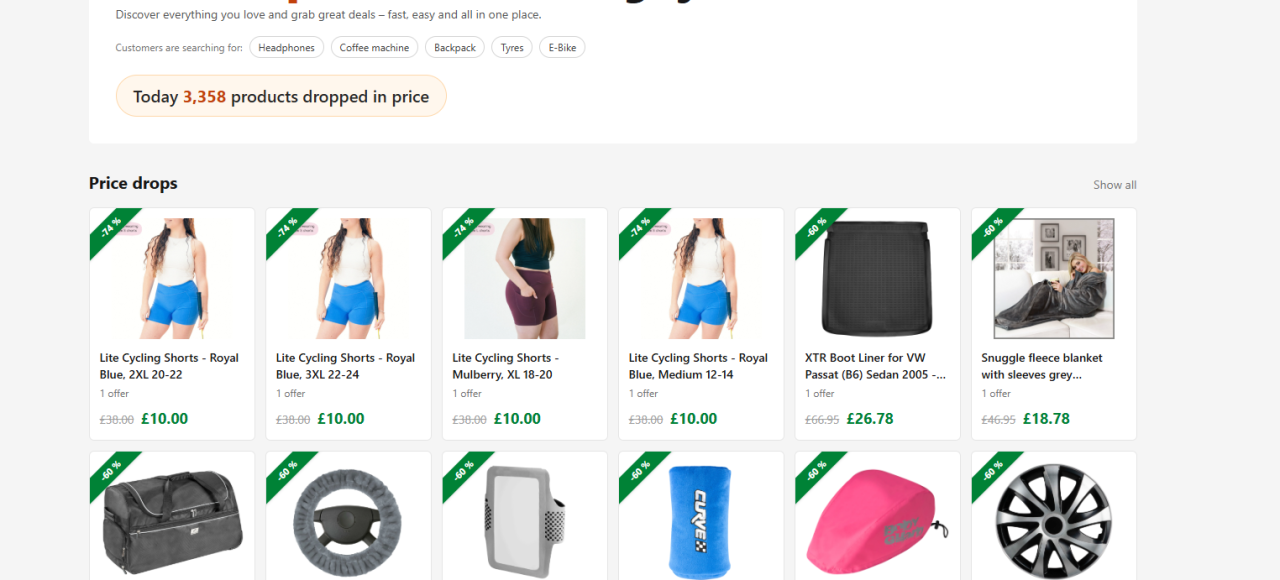
Image credit
- Photo: UnitedAds
- Image and details: UnitedAds GmbH, submitted on 10. September 2026
How agencies can generate additional revenue, build their own brand presence, and expand their Google Shopping services with a white-label CSS.
A white-label Comparison Shopping Service (CSS) allows agencies to offer a Google Shopping price comparison service under their own brand. An external provider supplies the technical platform. For the agency, the main considerations are the revenue model, how the service fits into existing offerings, and the ongoing workload.
1. Revenue Beyond Campaign Management Fees
The agency purchases the CSS service and sets its own customer pricing, provided the partnership model allows this.
Consider a hypothetical example: with 20 connected stores, a purchase price of €20 and a selling price of €49 per store per month, the agency generates €980 in monthly revenue against €400 in direct CSS costs. This leaves €580 before staff time, potential platform fees, and other expenses.
Alternatively, CSS access can be included in a campaign management package. In that case, there is no separately itemised CSS revenue, and the agency’s management fee needs to cover the cost.
2. Brand Visibility Alongside Shopping Ads
With the appropriate setup, the agency’s CSS name appears in the provider attribution on Shopping ads. The associated link leads to the price comparison site operating under its brand.
This creates an additional brand touchpoint. However, the number of connected stores alone does not establish how much brand awareness or new business this exposure will generate.
3. An Extension of Existing Shopping Services
Agencies already managing Shopping campaigns and product data can add CSS access to their service offering. Campaign management, feed optimisation, and CSS administration can then form part of a single package.
For customers, the practical benefit is a central point of contact: the agency coordinates setup and handles CSS-related questions with the platform provider. Responsibilities need to be clear, including who manages account migrations, technical issues, and support requests.
4. No Need to Develop a Price Comparison Platform
A white-label provider typically supplies the technical foundation of the comparison site. The additional services included vary: hosting, maintenance, product data integration, design customisation, and onboarding support may be covered differently by each provider.
This reduces development work for the agency. The agency remains responsible for selecting the provider, managing customer contracts, setting prices, and delivering its agreed services.
5. An Additional Service Can Strengthen Client Relationships
When CSS becomes part of ongoing Shopping management, it adds another element to the client relationship. Stronger retention depends primarily on reliable setup, billing, and support. Branding alone is unlikely to provide a sufficient reason for customers to stay.
A white-label CSS makes commercial sense when the revenue, or the value it adds to a management package, exceeds the total cost. The key factors are the number of connected stores, the margin per store, any setup and platform fees, and the actual support workload.
Original content by UnitedAds GmbH
Do you have a legal concern about this release? Reports are free of charge.
Are you listed as the company or press contact of this release?
The sign-in link goes to the listed address:
- a***@unitedads.de
You will receive a sign-in link by email – no password required. Different address? Sign in via e-mail link.